Renaissance still life code
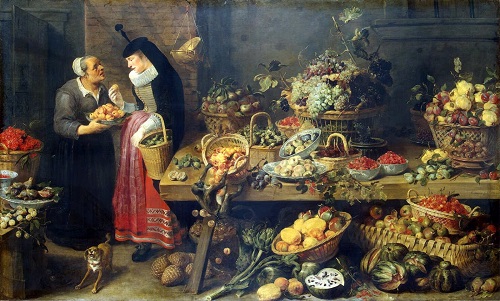
Renaissance still life code – Frans Snyders, Fruit Stall. Flanders, between 1618 and 1621. The State Hermitage Museum, Russia.
At the end of the Renaissance in northern Europe still life genre from decorative has become a philosophical statement in paints. XVI-XVIII century – a golden time in the history of European still life. In those years, there were two main schools of art, specializing in images of flowers, fruit and subjects – Flemish and Dutch. Despite the fact that Flanders (Belgium) and the Netherlands were the neighboring states, their artists had different meanings in the display of “dead nature” (still life in Flanders), or “quiet life” (in the Netherlands).

The main objective of Dutch masters – to express the idea of ”vanity of vanities” impermanence of all things, the proximity of death. These topics most worried Protestant theologians. Therefore, in still lifes by Dutch artists we often meet skull, extinguished candle, a stopped clock. All of this framed with poppies – a symbol of eternal sleep, daffodils – a symbol of the transience of life, violets – symbols of the fragility of beauty, and so on.
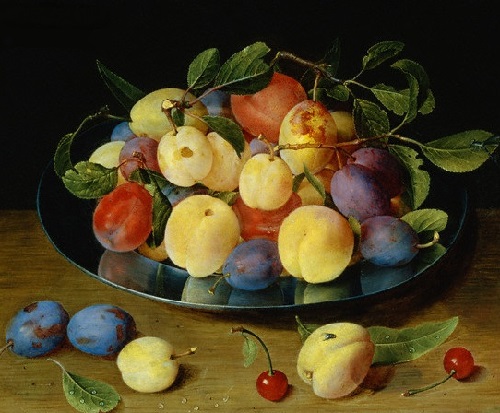
In Flanders, it was the opposite. In contrast to the Protestant Netherlands, Belgium experienced Catholic revival, and task worthy of the artist, was not negation but affirmation, the glorification of God’s creation. In the words of the German mystic Paracelsus: “In short, plants and rocks – everywhere is God.”

Therefore, the Flemish still life – a celebration of life, the triumph of perfect nature. Virtuoso of the genre is considered Frans Snyders, a colleague and friend of Rubens. In the years 1618- 1621, he created four paintings under the title “bench”, “Fish Shop”, “Shop Game” (of poultry), “Shop vegetables” and “Fruit Shop”, which is now kept in the Hermitage, St. Petersburg, Russia. According to the employee of the museum candidate of art Olga Prokhorova, an encyclopedia of Flemish still life with his major allegorical themes – “Seasons”, “The Five Senses” (taste, hearing, smell, touch, sight) and “The Four Elements” (air, water, fire , earth). Most rich with symbols is “Fruit Shop.”
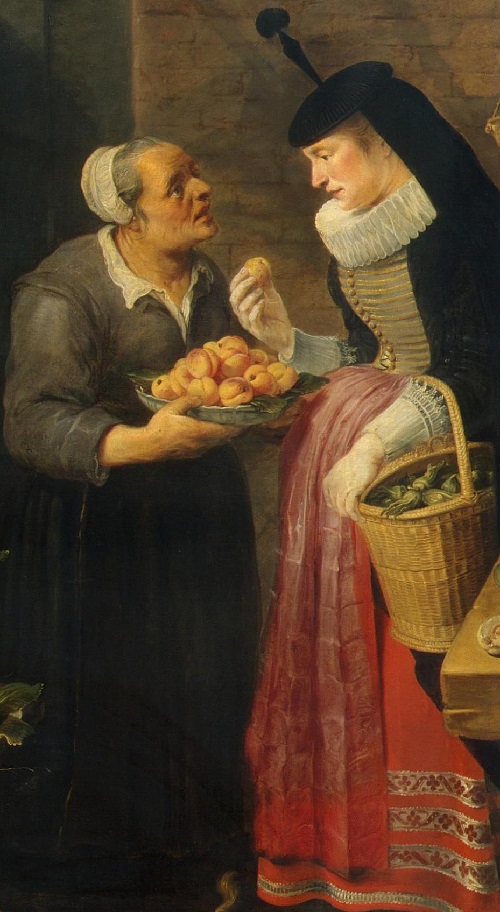
The figures of Shopkeeper and the lady represent the peaceful life (in other paintings this role is carried out by plowing farmer and the marina).

(1) Hand with apricot symbolizes the sense of touch. Apricot is a symbol of self-sufficiency (this is a self-pollinating tree).
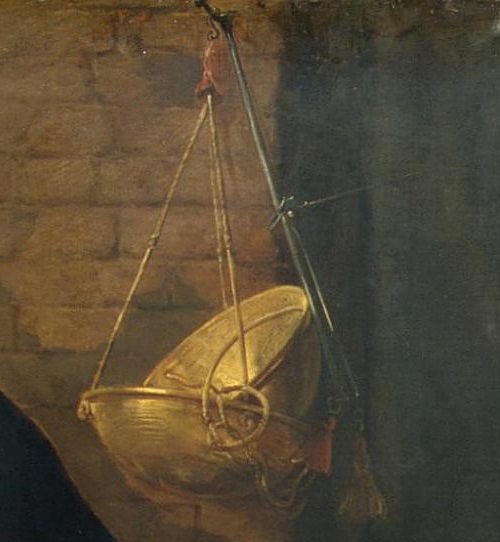
(2) Scales, like any forged object, symbolize fire (while fish symbolizes water, broken bird – air and crops – earth).
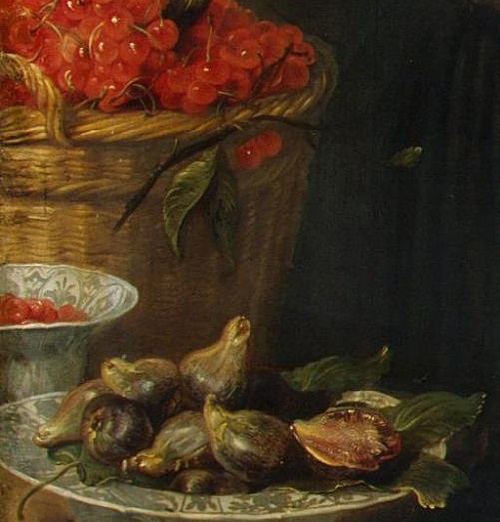
(3) The fig is a symbol of generosity (it gives abundant fruits).

(4) Barking dog is a symbol of hearing (ear perceives barking) . On the other paintings of Snyders we meet other characters of taste (meat, fish) and smell (dog sniffing game).
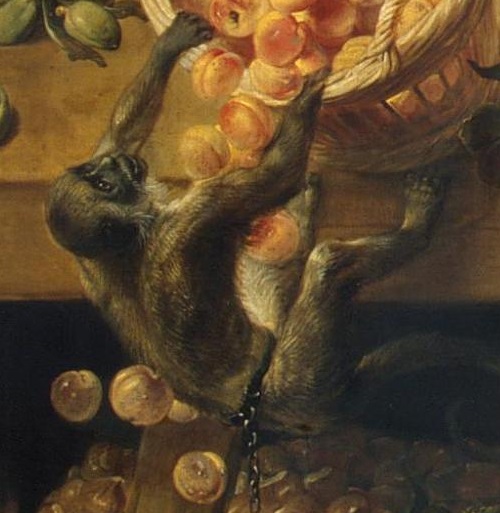
(5) The monkey symbolizes taste.

(6) Pine cones (Italian pine)- symbol of hope for happiness in eternity (pine – evergreen tree).

(7) Asparagus – symbol of peace (in the Middle Ages it was used as a sedative).

(8) Squirrel is a symbol of hard work it took to grow this abundance.

(9) Artichoke is a symbol of earthly love (it was believed that it helps to get pregnant).
Fruit is a symbol of summer (grass were symbols of spring, poultry – autumn, and fish – winter, they are depicted in the other three paintings from the series by Snyders).

(10) Lemon is a symbol of fidelity and love (it bears fruit throughout the year).
(11) Pomegranate is a symbol of the universal church (as it brings together as many people, as many grains are in a pomegranate).
(12) Orange is a symbol of purity and innocence (its white flowers often decorated the Virgin).

(13) Blackberry is a symbol of purity of the Virgin Mary. It is believed that burning bush, which appeared to Moses, blackberry serves as a prototype of motherhood and virginity of the Virgin. Therefore, about the Mother of God said: “She gave birth to the flame of divine love, not burned with desire.”
Renaissance still life code
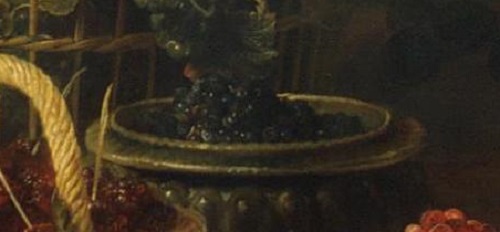
(14) Raspberry – symbol of kindness (Saint Martin fed the poor with raspberries).
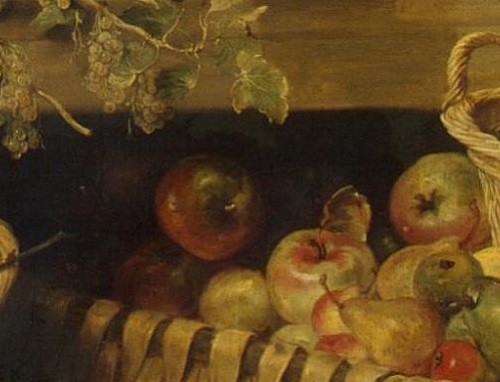
(15) Apple is the symbol of salvation and redemption (it is often portrayed in the Middle Ages in the hands of baby Jesus).
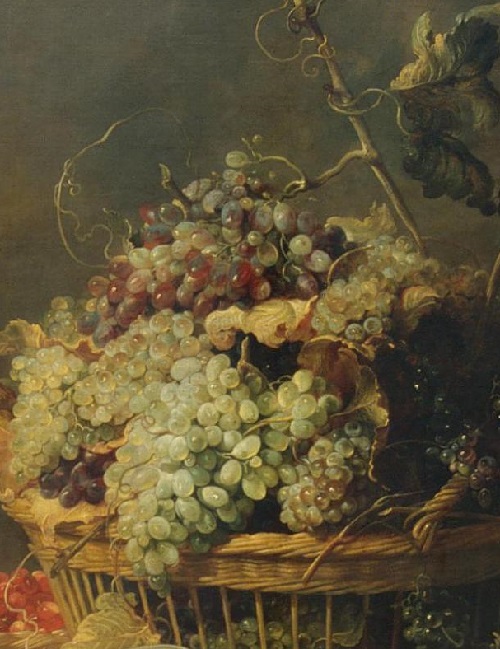
(16) Grapes are a symbol of Christ (“I am the true vine, and my Father – grower”, John. 15: 1).
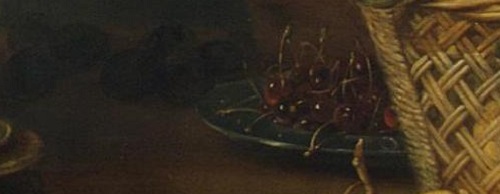
(17) Cherry symbol of Jesus’ blood.

(18) Plum is considered a symbol of loyalty, but additional meanings depends on the color. Dark purple plum points to the suffering and death of Christ, yellow – the purity of Jesus, red is a symbol of his mercy, white speaks of his humility.

(19) Sweet cherry is a symbol of heavenly grace.
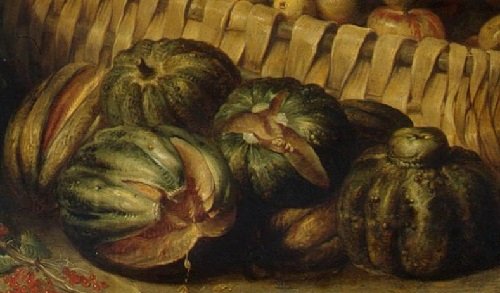
(20) Pumpkin is a symbol of resurrection and salvation (according to the Bible, a pumpkin grown by the will of God, to give the shadow to the prophet Jonah).

(21) Pear – sweet symbol of virtue.

(22) Peach is a symbol of the Trinity (it consists of three parts: the fruit, bone and bone kernel).


